
The 2029 Power Shift: How an 850-Seat Parliament Changes India
POLITICS
Vishal Thakur
4/17/20264 min read
Live Update: The Final Countdown (April 17, 5:45 PM IST)
As of late this afternoon, the Lok Sabha is in the midst of a high-tension voting process. Following a marathon debate that spanned over 30 hours, the House has moved toward the final "division of votes." Prime Minister Narendra Modi made a final, impassioned appeal to all members just hours ago, urging them to rise above party lines for the sake of "Nari Shakti" (Women Power).
The atmosphere in New Delhi is electric. With the government still hunting for the final few votes to reach the 360-mark, the result of this afternoon's session will determine if the 131st Amendment becomes law today or faces a historic delay.
The Triple-Bill Strategy: A Masterstroke in Timing
The most significant development this week is the government’s decision to present three separate but deeply connected bills as a single package. By grouping the Constitution (131st Amendment) Bill, the Delimitation Bill, and the Union Territories Laws Bill, the administration has made a clever tactical move.
Instead of treating women’s reservation as a standalone issue, they have tied it directly to the expansion of Parliament and the redrawing of voting boundaries. This "package deal" ensures that one cannot happen without the other. It also extends these rules to places like Delhi, Jammu & Kashmir, and Puducherry, making sure the entire country moves together. By presenting them this way, the government has placed the opposition in a difficult position: to support the popular women’s quota, they must also accept the new rules for redrawing the political map.
The April 17 Voting Crisis: A High-Stakes Stand-Off
The Parliament is currently in the middle of a historic showdown. Because changing the Constitution is a major move, the government needs a "special majority"—specifically, two-thirds of the members present must vote "Yes."
With 540 members currently in the House, the target is 360 votes. The ruling coalition (the NDA) has 293 seats, leaving them 67 votes short. This has turned the session into a tense numbers game. Prime Minister Narendra Modi has framed the vote as a choice between progress and delay, warning that those who block the bill will have to answer to millions of women voters in the upcoming state elections.
Speeding Up the Clock: 2029 vs. 2031
For years, the plan to give women 33% of the seats in Parliament was stuck behind a "census freeze." Legally, the government had to wait for the next big population count before they could change anything.
The 131st Amendment removes this hurdle. It "unlinks" the women’s quota from the next census, allowing the government to start redrawing the map immediately using the most recent published data (from 2011). This move effectively speeds up the timeline by years, aiming to have the new system ready for the 2029 General Election.
The 850-Seat Solution: Growth Without Conflict
The most practical part of this plan is the expansion of the Lok Sabha itself. To ensure that giving seats to women doesn't mean firing current male politicians—which would cause massive political fighting—the government is simply making the House bigger.
The plan is to grow the Lok Sabha from 543 seats to approximately 850 seats. By adding roughly 300 new seats, the government can guarantee women their 33% share (about 280 seats) without reducing the number of seats available for men. It is a pragmatic way to bring about change while keeping the peace within political parties.
Balancing the North and the South
A major concern in redrawing the map is the "North-South divide." Southern states feared that because they successfully controlled their population growth, they would lose seats to the faster-growing states in the North.
The new bills propose a "Fair Increase" model. Instead of only looking at population, seats will increase in every state by the same percentage. This keeps the balance of power exactly where it is today, ensuring that no region is "punished" for its success in family planning.
The "Representation Dividend": Why More Women in Power Matters
Beyond the politics of seat numbers, the 131st Amendment is expected to trigger a major shift in how India develops. Decades of research—both in India and globally—suggest that when more women enter the legislative house, the quality of daily life improves significantly for the average citizen.
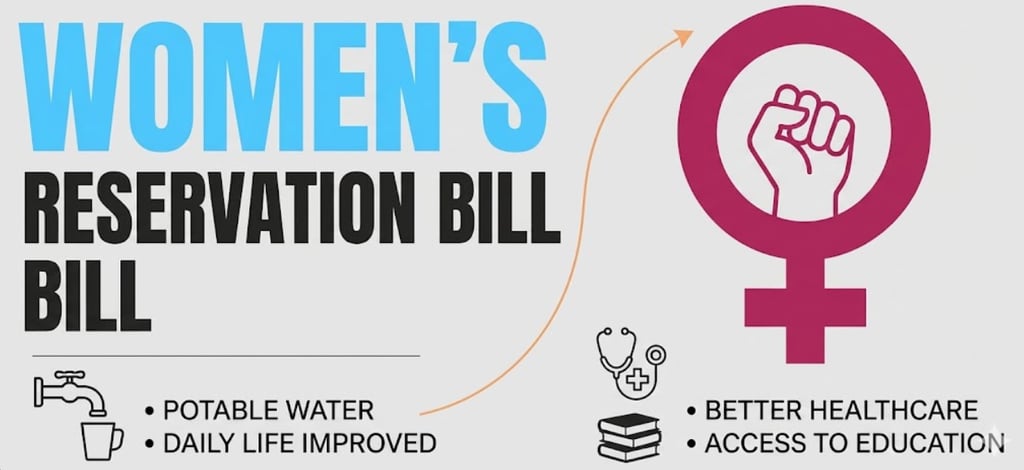
Studies on India's own Panchayati Raj system (local village councils) have shown a clear "Representation Dividend." Researchers, including Nobel laureate Esther Duflo, found that women leaders tend to invest more in "soft infrastructure"—the essential services that matter most to families. Specifically, districts led by women saw a marked increase in:
Potable Water: Significant investment in clean drinking water projects and hand pumps.
Public Health: Better attendance at primary health centers and higher rates of childhood immunization.
Education: A measurable boost in school enrollment for girls and better-maintained primary school facilities.
When women hold one-third of the seats in Parliament, the national budget is likely to shift toward these "life-cycle" priorities. It isn't just about gender equality; it's about a more empathetic and practical style of governance that solves the basic problems people face every day.
Global Success Stories: What We Can Learn
India is not alone in this journey. Other nations have shown that when women have a real seat at the table, the country wins:
Rwanda (The Global Leader): Currently leads the world with over 60% women in its parliament. Following a period of national recovery (after the 1994 genocide against the Tutsi), Rwanda rewrote its laws to mandate female representation. This shift has led to some of the world's most effective laws on education and community health.
Mexico (The Balance Model): Mexico uses a strict "50/50" rule, requiring political parties to field an equal number of male and female candidates. Their Congress is now perfectly balanced.
United Arab Emirates: In 2019, the UAE mandated that half of its national council must be women, instantly becoming a world leader in gender parity.
Better Representation for the Citizen
A larger Parliament means your local MP will look after a smaller area. Right now, one MP in India represents about 2.5 million people—an impossible number for one person to manage. By 2029, this number will drop, making it easier for you to reach your representative and demand better schools, roads, and hospitals.
The 131st Amendment is more than just a law; it is a total reboot of how India is governed. By 2029, the Parliament will be larger, more female, and much more focused on the hyper-local needs of every Indian.
Connect
contact@blowpost.com
© 2025. All rights reserved.
BlowPost is an independent geopolitical and market intelligence publication. We cater to traders, bankers, logistics professionals, and anyone who wants to understand the structural forces beneath global events — energy markets, capital flows, and trade corridors. No ideology. No institutional interest. Just the structure.