
The Engineer Takes the Throne.
The Question Is Whether He Knows What He's Inherited.
TECH
Vishal Thakur
4/21/20264 min read
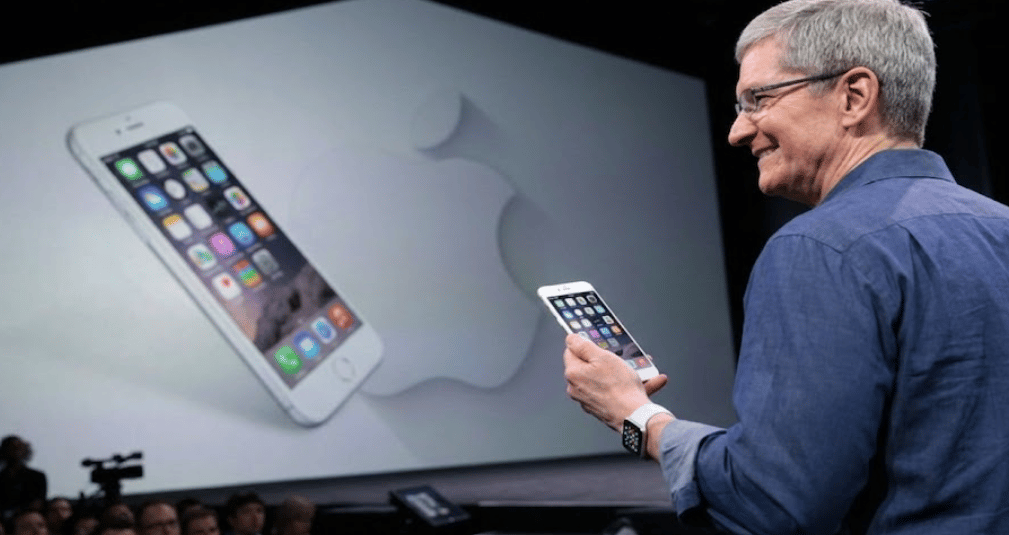
Apple just handed its most consequential leadership transition in 15 years to a man who has spent his career obsessing over millimetre tolerances. The market is worth $4 trillion and the challenge is existential.
Tim Cook did not build Apple into a $4 trillion company by being a visionary. He built it by being the most disciplined supply chain operator in the history of consumer electronics. When Steve Jobs died in October 2011, Apple's market capitalisation stood at roughly $350 billion. Cook inherited a product company and turned it into a platform empire. Revenue grew approximately fourfold — from $110 billion to $416 billion. Profits followed the same arc. The Services division, which Jobs had famously resisted, became a 75%-margin cash engine generating over $106 billion annually. Cook's real product was the ecosystem itself, and he was meticulous about not letting go of it.
On Monday, Cook announced he is stepping down as CEO on September 1, 2026, moving to executive chairman. His successor is John Ternus, 50, currently Apple's Senior Vice President of Hardware Engineering — the man responsible for every physical product the company has shipped since 2021. The transition was described as unanimous and long-planned. That framing is doing a lot of work.
"Apple chose a hardware engineer to navigate an AI moment. That is either the most contrarian bet in Silicon Valley, or the most honest acknowledgement of what Apple actually is."
The surface reading is that Apple is doubling down on what it knows. Ternus is not a software CEO. He is not a services CEO. He has spent 25 years inside the product development machine — first on the Cinema Display, then through generations of Mac, iPad, AirPods, and iPhone. His instinct is to make things that are physically excellent. In a world where the competitive battleground has shifted to large language models, inference clouds, and AI-native software experiences, Apple's board has handed the keys to the person who cares most about the weight of the chassis.
That may not be as backward as it sounds. Apple's AI strategy has never been to win the model race. It has been to control the hardware substrate through which AI is experienced. Apple Silicon — the custom chip architecture that now runs every Mac, iPhone, and iPad — gives Apple a degree of vertical integration that no AI company working through third-party silicon can match. The iPhone is not a client device that calls a server. It is increasingly a computing environment in its own right. Ternus understands that environment at a level of technical depth that is unusual for a person about to run a $4 trillion company.
But the architecture argument only holds if the hardware keeps pace with what AI actually demands — and that is far from settled. Apple Intelligence, the company's branded AI layer, has drawn criticism for lagging behind what OpenAI, Google, and Anthropic are shipping at the model level. Cook spent his final years navigating this gap carefully, partnering with OpenAI while insisting Apple's approach was different. Ternus now inherits that strategic ambiguity. He will need to decide, quickly, whether Apple continues to position itself as the premium hardware platform on which other companies' AI runs — or whether it makes a more direct bet on building intelligence that is genuinely Apple's own.
"Cook's China dependency served Apple beautifully — until it didn't. Ternus inherits a diversification process that is incomplete, expensive, and politically exposed."
There is a second structural problem that has nothing to do with AI. Cook's supply chain genius was also Apple's greatest geopolitical vulnerability. Deep ties to Chinese manufacturing served the company through two decades of globalisation. Then the US-China trade war arrived, and Apple began the slow, costly process of moving production to India, Vietnam, and eventually the United States. That process is not finished. Under an active tariff environment and ongoing US-China tension, Ternus will have to manage a supply chain in transition — at precisely the moment he is also trying to reposition the company's technology strategy. These are not separate problems. The cost of manufacturing in non-China locations affects the margin structure of the hardware business, which in turn affects how aggressively Apple can price the devices on which its entire ecosystem depends.
Cook leaves behind a company that is financially extraordinary and strategically exposed. The Services business is a fortress, but it faces regulatory assault on multiple fronts — App Store antitrust rulings in the United States, platform compliance demands in Europe, and continued pressure on Apple Pay's dominance in mobile payments. These are legal and political problems, not engineering problems. Ternus has no known track record in Washington or Brussels. Cook spent years cultivating those relationships. That institutional knowledge does not automatically transfer with the chairman title.
The fog here is not about whether Ternus is capable. By all accounts, he is. The fog is about whether the job Apple needs done on September 1, 2026 is the same job Ternus has spent his career preparing for. Apple built its empire on the premise that hardware, software, and services could be fused so tightly that no competitor could replicate the experience. That premise still holds. But the fusion now has to include AI — and AI is being defined by people who think in parameters and training runs, not in millimetres and thermal envelopes. Ternus will need to bridge that gap, or find people who can. Everything else — the supply chain, the services revenue, the regulatory fights — is maintenance. The real question is whether Apple's next category-defining product comes out of Cupertino, or whether it gets assembled somewhere else and Apple just makes the case it runs better on their chip.
Tim Cook monetised Steve Jobs' invention for fifteen years and produced one of the most remarkable runs in corporate history. He leaves the stage at the peak of the valuation, which is the correct time to leave. Whether that peak holds depends almost entirely on what Ternus builds next — and whether building is still enough.
Connect
contact@blowpost.com
© 2025. All rights reserved.
BlowPost is an independent geopolitical and market intelligence publication. We cater to traders, bankers, logistics professionals, and anyone who wants to understand the structural forces beneath global events — energy markets, capital flows, and trade corridors. No ideology. No institutional interest. Just the structure.