
The Prototype Fast Breeder Reactor (PFBR) and the Future of Energy Autonomy
Heena
4/10/20262 min read
Overview of the Criticality Milestone
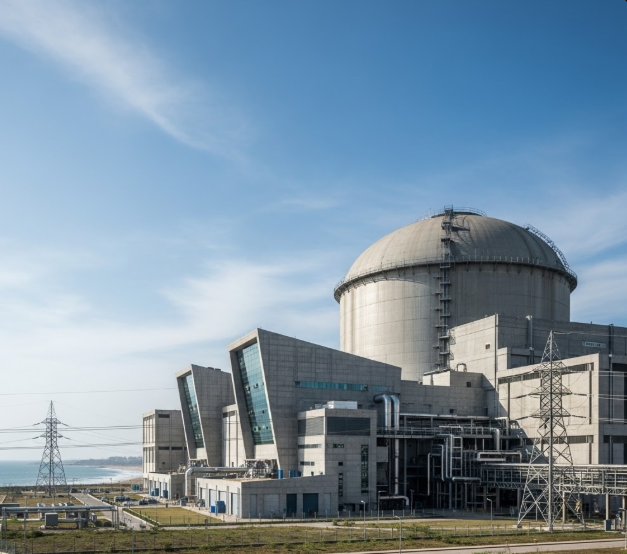
On April 6, 2026, at 8:25 pm, the Prototype Fast Breeder Reactor (PFBR) at the Kalpakkam Nuclear Complex in Tamil Nadu, India, achieved its first criticality. This milestone marks a structural shift in the nation's energy landscape; by successfully closing the nuclear fuel cycle, India has secured a pathway to energy self-sufficiency for decades to come.The structural blueprint for this milestone was laid in the 1950s by Dr. Homi J. Bhabha, the father of the Indian nuclear program.
Criticality refers to the state in which a nuclear reactor maintains a self-sustaining chain reaction, where the number of neutrons produced by fission is exactly equal to the number of neutrons lost or absorbed. The milestone was confirmed by Bharatiya Nabhikiya Vidyut Nigam Limited (BHAVINI), following clearance from the Atomic Energy Regulatory Board (AERB).
The Invisible Structure: From Scarcity to Circularity
Most energy systems operate on a linear logic of extraction and consumption. The PFBR introduces a circular structural logic to the national energy grid:
The Fuel Breeding Loop: Unlike conventional Light Water Reactors (LWRs) that consume Uranium-235, the PFBR utilizes Uranium-238 (a fertile material) and transmutes it into Plutonium-239. It effectively "grows" its own fuel while generating power.
Decoupling from Global Supply Chains: Structurally, this moves India away from dependence on the Nuclear Suppliers Group (NSG) and the volatile global uranium market. By utilizing "depleted" uranium from Stage 1, the PFBR turns industrial waste into a strategic asset.
Technical Architecture
Coolant System: Liquid Sodium. Structurally superior for heat transfer but technically demanding due to its high reactivity with air and water.
Neutron Economy: Operates on "fast" neutrons. This requires a dense core without a moderator (like water), necessitating precision engineering at the micron level to manage thermal expansion.
Capacity: 500 MWe, serving as the blueprint for future 600 MWe commercial units.
The Human Impact: A Shift in the Social Contract
The transition to a breeder-based economy impacts the human environment in three specific ways:
#The End of "Energy Poverty"
Structurally, the second stage is a prerequisite for the third stage (Thorium). Since India holds approximately 25% of the world's Thorium, the successful operation of the PFBR creates a path to multi-generational energy security. This fundamentally changes the economic outlook for industrialization and rural electrification.
#High-Tech Industrial Ecology
The 16-year delay in this project was largely due to the need to build an invisible infrastructure of expertise. Over 200 Indian MSMEs were involved in fabricating components that did not exist in the global market. The impact is the creation of a specialized labor force and a domestic high-tech manufacturing ecosystem.
#Environmental Stewardship
Fast reactors have the structural capacity to "burn" long-lived actinide waste from conventional reactors. By recycling fuel, the volume and toxicity of radioactive waste requiring long-term geological storage are significantly reduced, altering the environmental legacy left to future generations.
Global Positioning and Governance
India is now part of a duopoly (with Russia) operating commercial-scale fast breeder technology.
#Governance: Managed by BHAVINI (a Public Sector Undertaking), the project operates under the oversight of the Department of Atomic Energy (DAE).
#Strategic Autonomy: The ability to close the fuel cycle provides a structural "hedge" against international sanctions or shifts in geopolitical alliances.
Roadmap to 2030
With criticality achieved, the PFBR will undergo:
Phase 1: Low-power physics experiments (Months 1–4).
Phase 2: Gradual power ramp-up and thermal testing.
Phase 3: Integration with the Southern Power Grid (Expected late 2026/early 2027).
Connect
contact@blowpost.com
© 2025. All rights reserved.
BlowPost is an independent geopolitical and market intelligence publication. We cater to traders, bankers, logistics professionals, and anyone who wants to understand the structural forces beneath global events — energy markets, capital flows, and trade corridors. No ideology. No institutional interest. Just the structure.